A Food and Symptom Diary for Unexplained Fatigue
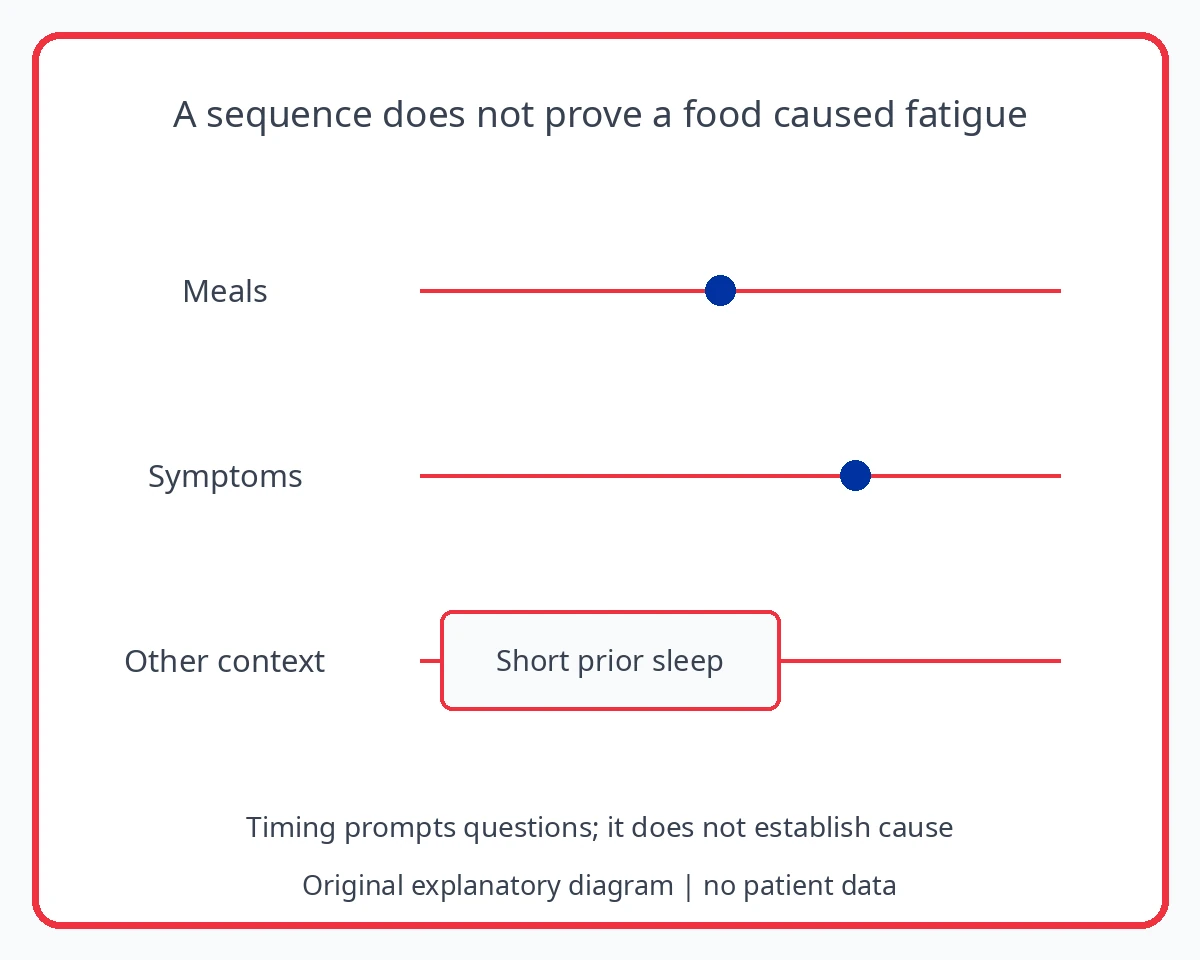
Fatigue after lunch is a sequence, not proof that lunch caused it. A food and symptom diary becomes more useful when it also preserves the previous sleep period, activity and other relevant context. Describe the meal and the symptom separately before trying to explain the connection.
On this page
- Record the meal you actually know about
- Give competing context room on the page
- Lunch and fatigue on a day with short sleep
- Do not remove the sleep lane to make a food story clearer
- Agree on the purpose before turning the diary into a diet
- Timing can suggest a question without establishing a cause
- Sources and reading context
Record the meal you actually know about
CUH’s food, mood and symptom diary is designed for a gastrointestinal care context. Its approach to recording intake and timing is a useful organizational example, but it is not a validated test for unexplained fatigue. Note foods, drinks, observed amounts and the meal time, marking uncertain details as estimates.
Avoid filling gaps with a standard portion or a remembered menu that may not describe what was eaten. If the drink or amount is unknown, say so. Keep the symptom in a separate entry with its own onset and description. This prevents a heading such as “trigger food” from assuming the conclusion before the record has been interpreted. [1]
Give competing context room on the page
MedlinePlus describes fatigue as a symptom with many possible causes. A short prior sleep period, illness, a demanding day or relevant medicine information may matter to the discussion. Their presence does not establish causation either. Recording them simply avoids making food look like the only candidate because everything else was omitted.
Use ordinary wording for the experience: sleepiness, lack of energy or difficulty with a task. Keep exact times only when known. A food diary that assigns a minute-by-minute causal story from uncertain memory is less useful than a simpler record that clearly distinguishes observations from guesses. [2]
Lunch and fatigue on a day with short sleep
This fictional example is a recording or evidence-reading exercise. It does not diagnose a condition or recommend a product, diet or exercise program.
| Observation or question | Available detail | What remains separate |
|---|---|---|
| Prior sleep | Person estimates about four hours asleep | Approximate context; not a laboratory result |
| Lunch | Meal recorded at 12:30; foods and amounts noted separately | Intake entry, not an identified trigger |
| Symptom | Low energy noticed around 14:00 while working | Timing approximate; cause unknown |
| Other detail | Activity and medicine changes need checking | Do not assume there were no other differences |
| Question | What may help explain the recurring concern? | Bring the complete context for assessment |
Do not remove the sleep lane to make a food story clearer
In the fictional day, lunch precedes low energy, but so does a night of short estimated sleep. The record cannot decide which factor, if either, explains the symptom. Writing “lunch caused fatigue” would turn timing into a conclusion and hide the other context.
A useful summary keeps the question open: low energy was noticed after lunch on a day with short sleep. If similar concerns recur, preserve the actual entries rather than selecting only days that fit the suspected food. The professional can then decide what further information or assessment is appropriate.
Keep the sleep information accurate using A Sleep Diary That Helps You Discuss Fatigue at an Appointment
Agree on the purpose before turning the diary into a diet
Bring the main concern and the dated entries, and ask whether a food record is useful for the question being assessed. The clinical team may suggest a different record or a dietitian’s involvement. There is no need to collect every detail indefinitely without knowing how it will be used.
Do not begin an exclusion diet or supplement simply because two events occurred close together. The diary does not diagnose food intolerance, nutritional deficiency or an endocrine disorder. Its value is a more accurate account of the day, with enough context to support the next discussion rather than a self-made dietary rule.
For a child’s growth appointment, use the separately scoped record in Preparing a Practical Food and Health Record for a Growth Appointment
Timing can suggest a question without establishing a cause
This guide does not diagnose food intolerance, nutritional deficiency or an endocrine disorder. No restrictive diet, calorie target or supplement is recommended.
Sources and reading context
- CUH food mood and symptom diary — GI diary v3 Dec2022; recording concept, not validated fatigue diagnosis or elimination-diet tool
- MedlinePlus fatigue — Fatigue versus drowsiness and broad clinical context; no GH-deficiency diagnosis from tiredness